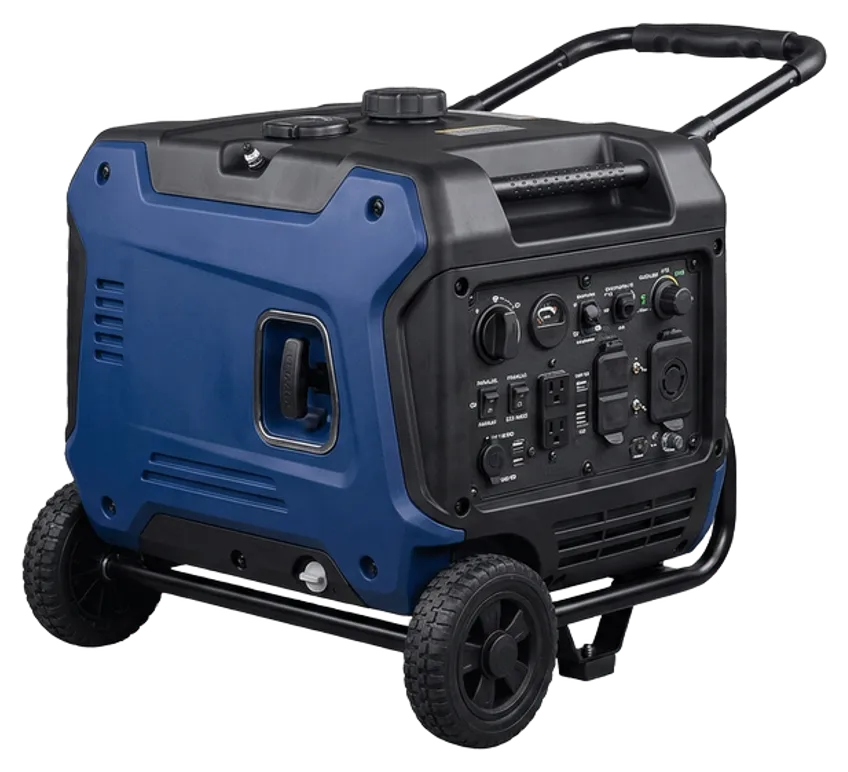
Westinghouse iGen5000DFc
Best all-round value dual-fuel inverter; Wirecutter 2026 top pick
Running: 3,900W
Starting: 5,000W
Noise: 52 dBA
Weight: 105.8 lb
Price: $800–$1,100
Last updated:
Fact-checked by Marcus Hayes, Master Electrician (License #CA-EL-89241), 15 years generator installation experience.
The best generator for home backup power is the Westinghouse iGen5000DFc — a 3,900-watt dual-fuel inverter with a CO shutoff sensor, 52 dBA quiet operation, and 18-hour runtime at $800 to $1,100. For whole-home backup, the DuroMax XP12000EH delivers 9,500 running watts for $1,100 to $1,400. For budget buyers, the WEN DF475T is the cheapest transfer-switch-ready option at $400 to $500. For automatic, hands-free backup, a standby generator like the Generac Guardian 22kW runs your entire home for $8,000 to $12,000 installed. Every pick below is compared by wattage, fuel type, runtime, noise, and what it can realistically power.
Quick recommendations based on common home backup scenarios. Each pick links to a full review with verified specs.
3,900W dual-fuel inverter with CO shutoff, 52 dBA quiet operation, and 18-hour runtime — the best balance of power, safety, and value for most homes.
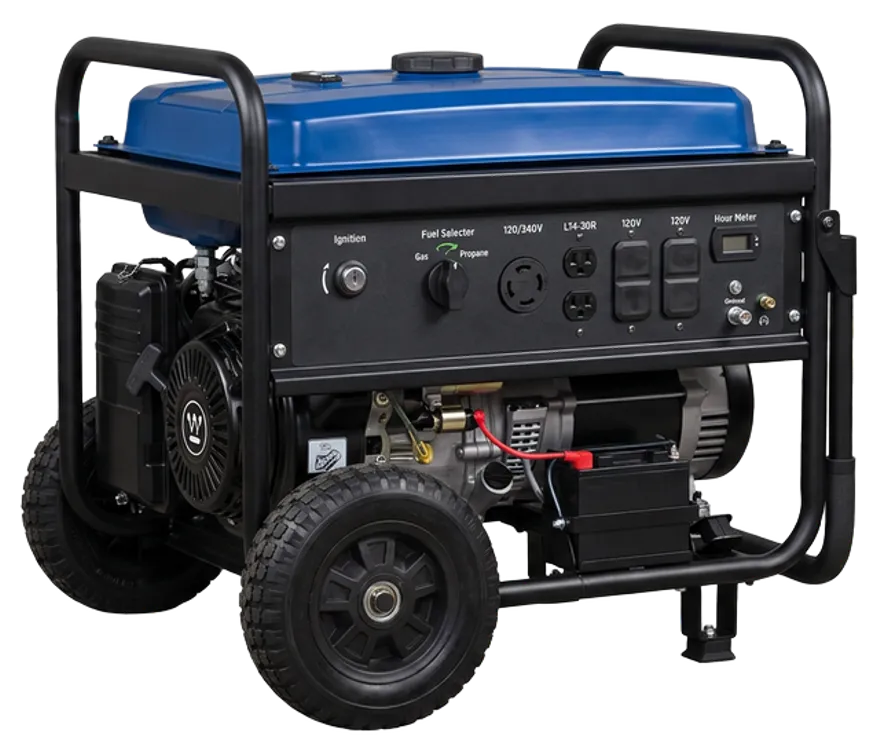
7,500W with L14-30R for direct transfer-switch hookup and remote key-fob start. Note: no CO sensor — add a battery-powered CO alarm.
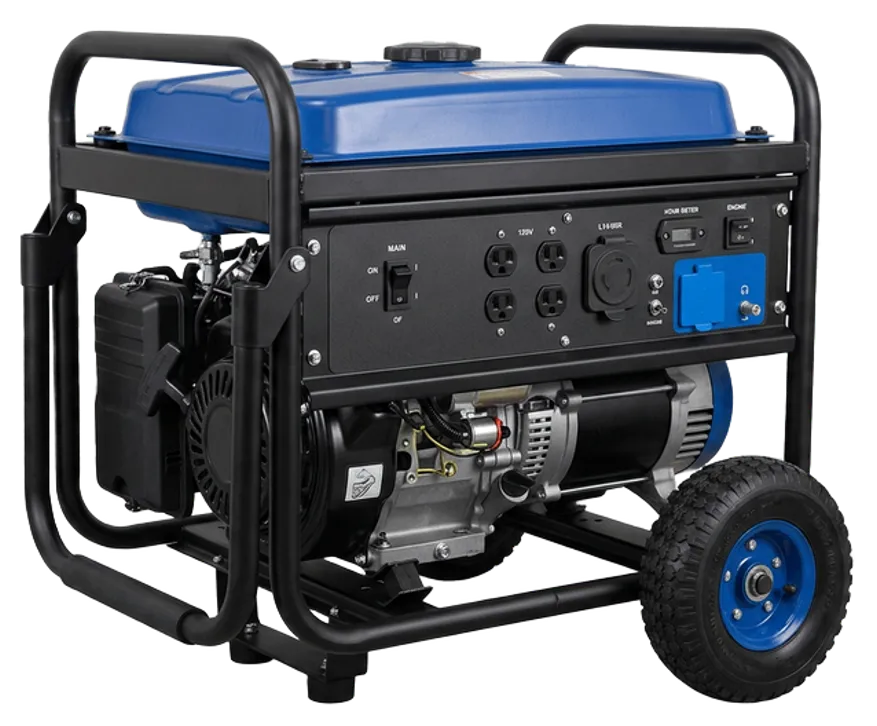
The only transfer-switch-ready dual-fuel generator under $500. L14-30R outlet and 120/240V selector make it code-compliant for panel connection.
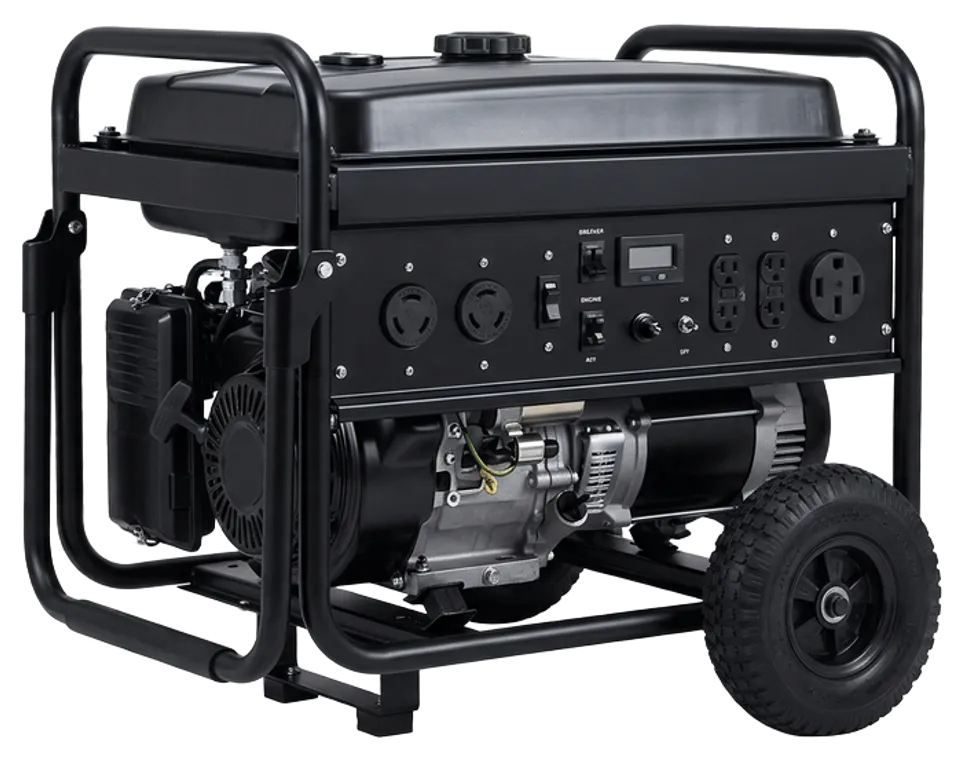
9,500 running watts with both L14-30R and 14-50R outlets — enough for most whole-house essential loads through a transfer switch.
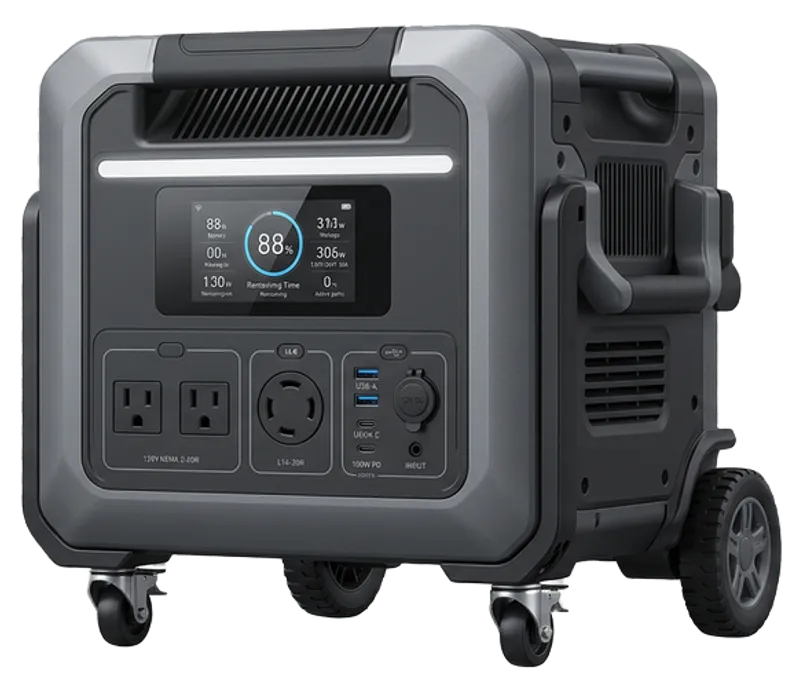
6,000W output from a 3,840Wh LiFePO4 battery with 2,400W solar input — recharge during multi-day outages without fuel. Indoor-safe and silent.
For automatic backup, a standby generator like the Generac Guardian 22kW ($8,000–$12,000 installed) starts itself and runs for days on natural gas. See our full standby generators guide.
Key specs for all picks. Scroll horizontally on mobile to see all columns.
| Model | Award | Running W | Starting W | Fuel | Noise dBA | Runtime | L14-30 | CO Shutoff | Price Band | Buy |
|---|---|---|---|---|---|---|---|---|---|---|
| Westinghouse iGen5000DFc | Best Overall | 3,900 | 5,000 | gasoline, propane | 52 | 18h @25% | No | Yes | $800–$1,100 | Buy Now |
| DuroMax XP12000EH | Best for Whole-House Backup | 9,500 | 12,000 | gasoline, propane | 74 | 19h @25% | Yes | Yes | $1,100–$1,400 | Buy Now |
| EcoFlow Delta Pro 3 | Best Battery Backup | 4,000 | 8,000 | battery, solar | — | — | Yes | — | $2,500–$3,500 | Buy Now |
| Anker SOLIX F3800 | Best High-Capacity Solar | 6,000 | 9,000 | battery, solar | — | — | Yes | — | $2,500–$4,000 | Buy Now |
| Westinghouse WGen7500DF | Best Value Home Backup | 7,500 | 9,500 | gasoline, propane | 72 | 11h @25% | Yes | No | $1,000–$1,300 | Buy Now |
| Champion 201592 4000W Dual Fuel Inverter | Best Budget Dual-Fuel Inverter | — | 4,000 | gasoline, propane | 64 | 10h @25% | No | Yes | $700–$900 | Buy Now |
| WEN DF475T | Best Under $500 | 3,800 | 4,750 | gasoline, propane | — | 11h @50% | Yes | — | $400–$500 | Buy Now |
Running watts are the continuous power an appliance needs; starting watts are the brief 2-to-3-second surge required to start a motor. A generator must handle the highest single starting surge plus the running watts of everything else running at the same time. Actual appliance wattage varies by model and condition — use our generator size calculator for a precise figure based on your specific loads.
| Generator | Running W | Starting W | Can Power | Cannot Power |
|---|---|---|---|---|
| WEN DF475T | 3,800W | 4,750W | Fridge, lights, furnace blower, TV | Central AC, well pump, electric water heater |
| Champion 201592 | ~2,500W | 4,000W | Fridge, lights, furnace blower, CPAP | Microwave + fridge simultaneously, window AC |
| Westinghouse iGen5000DFc | 3,900W | 5,000W | Fridge, furnace, lights, TV, microwave, sump pump | Central AC, electric water heater, electric range |
| Westinghouse WGen7500DF | 7,500W | 9,500W | Fridge, furnace, well pump, lights, microwave, window AC | Central AC, electric water heater, electric range |
| DuroMax XP12000EH | 9,500W | 12,000W | Fridge, furnace, well pump, window AC, microwave, most essentials | Central AC (24,000 BTU+), electric water heater + range simultaneously |
| EcoFlow Delta Pro 3 | 4,000W | 8,000W | Fridge, furnace, lights, TV, microwave (battery-limited) | Central AC, long runtime without solar recharge |
| Anker SOLIX F3800 | 6,000W | 9,000W | Fridge, furnace, well pump, lights, microwave (battery-limited) | Central AC, multi-day runtime without solar recharge |
Wattage values are typical running and starting watts. Not all listed appliances can run simultaneously. A refrigerator alone needs about 2,200W to start its compressor — the single largest surge in most homes.
Best all-round value dual-fuel inverter; Wirecutter 2026 top pick
Highest usable wattage per dollar; L14-30R plus 50A 14-50R
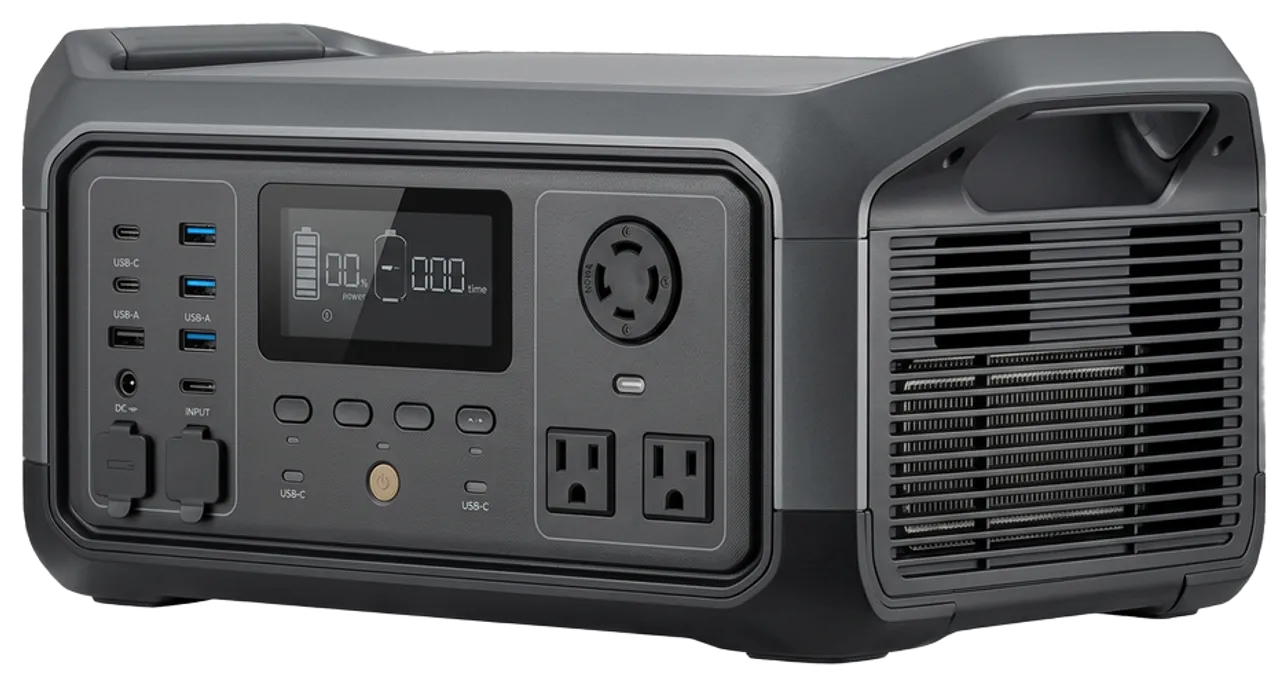
Indoor-safe home backup with native 120/240V split-phase and 48kWh expansion
Highest output battery unit with built-in NEMA 14-50 and L14-30 for EV/RV and panel tie-in
Transfer-switch-ready home backup with remote key fob start
Safety Notice
This model does NOT include a carbon monoxide (CO) shutoff sensor. You MUST use a battery-powered CO alarm indoors and place the generator at least 20 feet from any door, window, or vent.
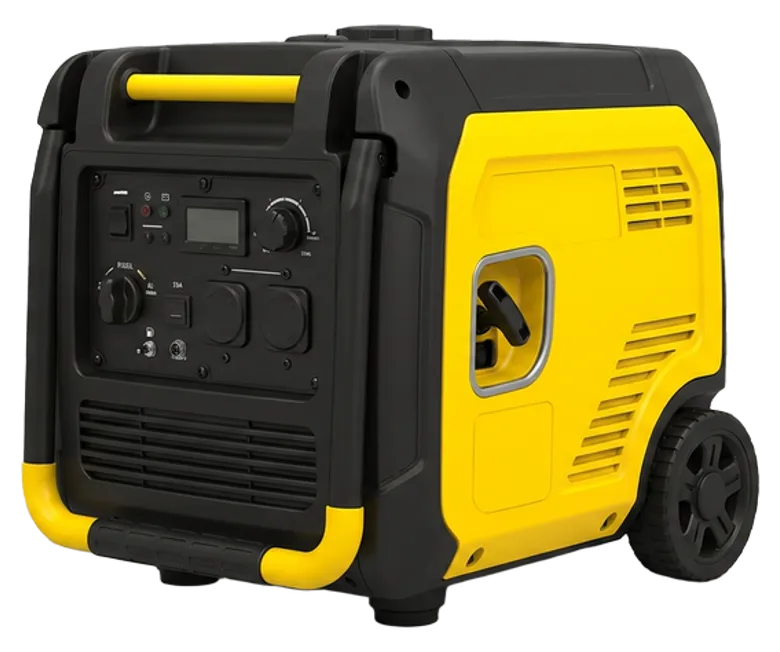
Longest propane runtime in class at 25h on a 20lb tank
Cheapest route to a transfer-switch-ready 120/240V dual-fuel unit
Safety Notice
No carbon monoxide (CO) shutoff sensor has been confirmed for this model. Treat it as absent: use a battery-powered CO alarm indoors and place the generator at least 20 feet from any door, window, or vent.
| Factor | Portable Generator | Standby Generator |
|---|---|---|
| Price | $400 to $1,500 | $5,000 to $15,000 installed |
| Wattage | 2,000 to 12,000W | 10,000 to 26,000W |
| Fuel | Gasoline, propane, or battery | Natural gas or propane |
| Startup | Manual (pull cord, electric, or remote) | Automatic within 30 seconds |
| Runtime | 6 to 19 hours per tank | Days to weeks (natural gas = unlimited) |
| Installation | No installation; use extension cords or transfer switch | Professional installation required (pad, plumbing, wiring) |
| Noise | 48 to 78 dBA (varies by model) | 60 to 70 dBA at 23 ft |
| Maintenance | Oil changes, fuel stabilizer, monthly test run | Annual service by technician |
| Best for | Budget backup, occasional outages, essential circuits | Frequent outages, whole-home coverage, hands-off operation |
Most homeowners start with a portable generator and upgrade to standby if outages are frequent. A portable dual-fuel generator like the Westinghouse iGen5000DFc paired with a transfer switch covers essential circuits for under $1,500 total. If you experience 3+ outages per year or need central AC during outages, a standby generator is worth the investment. See our portable vs standby vs solar guide for a deeper comparison, including solar battery backup as a third option.
| Home Size / Need | Running Watts | Recommended Generator | Price Range |
|---|---|---|---|
| Small home / apartment essentials | 2,000 to 3,500W | WEN DF475T or Champion 201592 | $400 to $900 |
| Essential circuits (fridge, furnace, lights) | 5,000 to 7,500W | Westinghouse iGen5000DFc or WGen7500DF | $800 to $1,300 |
| Large home with well pump or window AC | 7,500 to 10,000W | Westinghouse WGen7500DF or DuroMax XP12000EH | $1,000 to $1,400 |
| Whole-house including central AC | 10,000 to 22,000W | Generac Guardian 22kW (standby) | $8,000 to $12,000 installed |
| Indoor-safe essential backup | 2,600 to 6,000W (battery) | EcoFlow Delta Pro 3 or Anker SOLIX F3800 | $2,500 to $4,000 |
The single most important number is your refrigerator's starting watts — about 2,200W for 2 to 3 seconds when the compressor kicks on. Your generator must handle that surge plus the running watts of everything else. For a full walkthrough, read our detailed sizing guide or use the generator size calculator to get an exact figure for your appliances.
Carbon Monoxide Safety
Over 70 Americans die each year from carbon monoxide poisoning caused by portable generators. Always place a gas or propane generator at least 20 feet from any door, window, or vent. Even if your generator has a CO shutoff sensor, use a battery-powered CO alarm inside your home. Read our full CO safety guide.
Top portable picks for home and RV backup.
Standby and portable whole-house options.
Automatic, permanent backup generators from Generac and Kohler.
Gas and propane flexibility for fuel shortages.
Clean, quiet power safe for electronics.
Indoor-safe, silent battery backup stations.
Step-by-step sizing guide with home-size chart.
Interlock, manual, and automatic transfer switches compared.
Which generator type is right for your home?
Outage-specific prep checklist and duration-based picks.
Select your appliances and get matched with generators.
The 20-foot rule, CO sensors, and placement guide.
Affiliate disclosure: We earn commissions from qualifying purchases made through links on this page, at no extra cost to you. Our recommendations are based on independent research and testing. Read full disclosure.