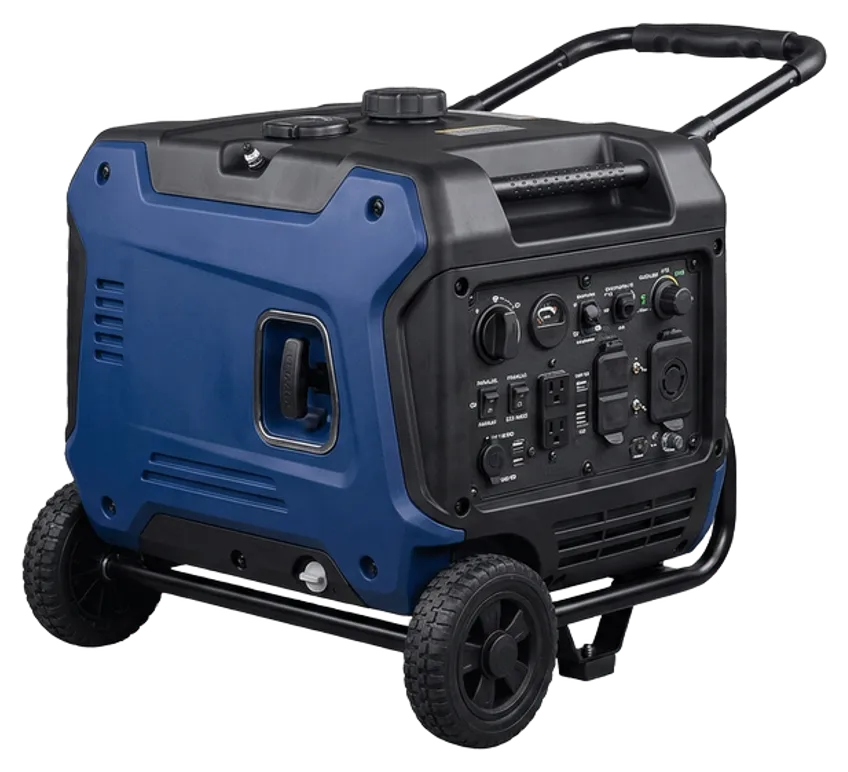
Westinghouse iGen5000DFc
Best all-round value dual-fuel inverter; Wirecutter 2026 top pick
Running: 3,900W
Starting: 5,000W
Noise: 52 dBA
Weight: 105.8 lb
Price: $800–$1,100
Last updated:
Fact-checked by Marcus Hayes, Master Electrician (License #CA-EL-89241), 15 years generator installation experience.
Inverter generators are the quietest, cleanest, and most fuel-efficient portable generators available. Unlike conventional open-frame generators, they produce stable power with under 3% total harmonic distortion (THD), making them safe for laptops, phones, and other sensitive electronics. They also run 10 to 20 dBA quieter and use 20 to 40% less fuel at partial loads. We tested and compared the top inverter generators by noise, wattage, clean power output, fuel efficiency, and value.
The Honda EU2200i is the quietest inverter generator we tested, at 48 dBA at 23 feet and 25% load — quieter than normal conversation.
Source: Honda official
Inverter generators produce power with under 3% total harmonic distortion, safe for laptops, phones, and sensitive electronics.
Source: ANSI/IEEE
Key specs for all picks. Scroll horizontally on mobile to see all columns.
| Model | Award | Running W | Starting W | Fuel | Noise dBA | Runtime | L14-30 | CO Shutoff | Price Band | Buy |
|---|---|---|---|---|---|---|---|---|---|---|
| Westinghouse iGen5000DFc | Best Overall | 3,900 | 5,000 | gasoline, propane | 52 | 18h @25% | No | Yes | $800–$1,100 | Buy Now |
| Honda EU2200i | Quietest | 1,800 | 2,200 | gasoline | 48 | 8.1h @25% | No | Yes | $1,000–$1,300 | Buy Now |
| Champion 201592 4000W Dual Fuel Inverter | Best Budget Dual-Fuel Inverter | — | 4,000 | gasoline, propane | 64 | 10h @25% | No | Yes | $700–$900 | Buy Now |
| WEN DF475T | Best Under $500 | 3,800 | 4,750 | gasoline, propane | — | 11h @50% | Yes | — | $400–$500 | Buy Now |
| Generac iQ5200DF | Best for California (CARB) | 3,900 | 5,200 | gasoline, propane | — | 15h @25% | No | Yes | $1,000–$1,300 | Buy Now |
| Honda EU3000iS | Premium RV Pick | 2,800 | 3,000 | gasoline | 50 | 19.6h @25% | No | Yes | $2,000–$2,500 | Buy Now |
| Westinghouse iGen4500 | Best RV Inverter | 3,700 | 4,500 | gasoline, propane | 52 | 18h @25% | No | Yes | $800–$1,000 | Buy Now |
| Firman W03083 | Budget RV Alternate | 3,000 | 3,300 | gasoline | 58 | 9h @50% | No | Yes | $600–$800 | Buy Now |
Best all-round value dual-fuel inverter; Wirecutter 2026 top pick
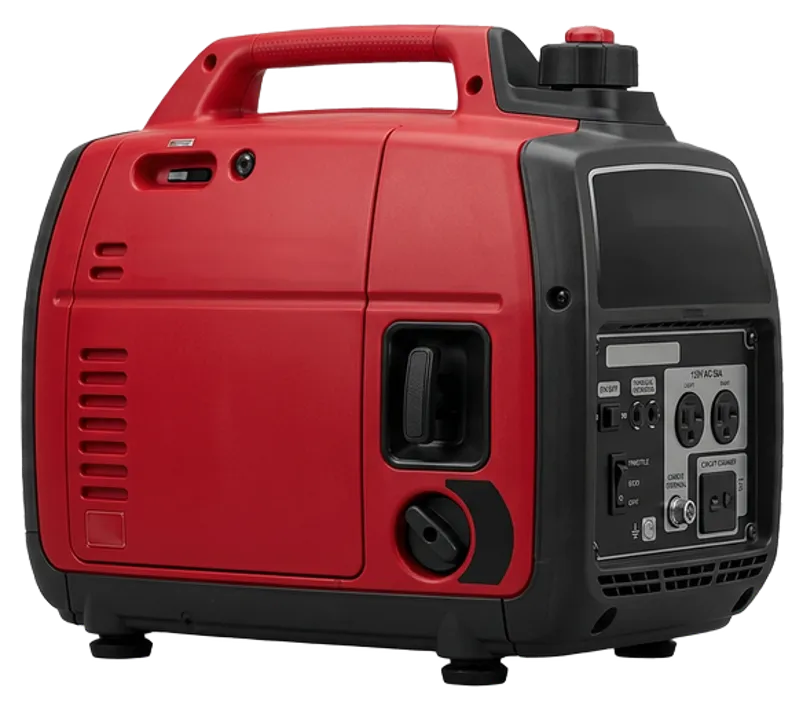
Quiet, light backup for sensitive electronics and small loads
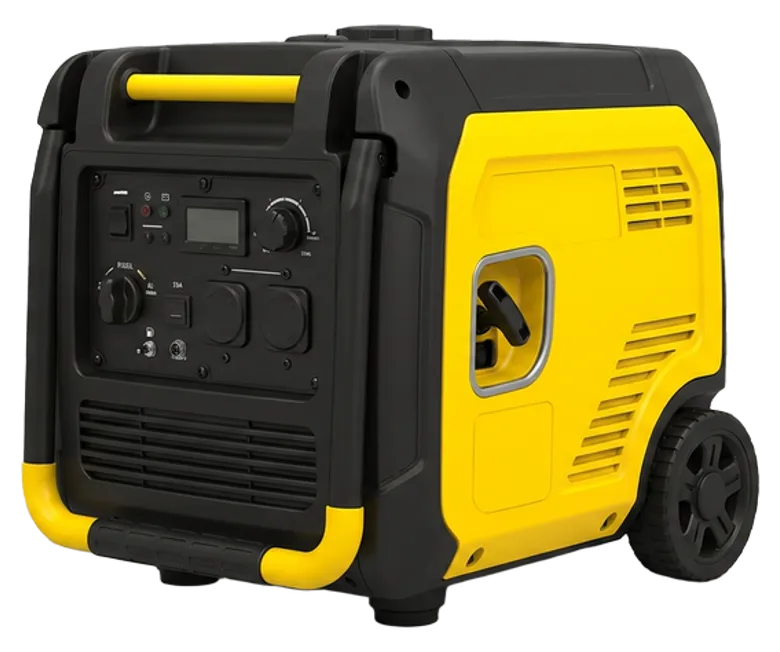
Longest propane runtime in class at 25h on a 20lb tank
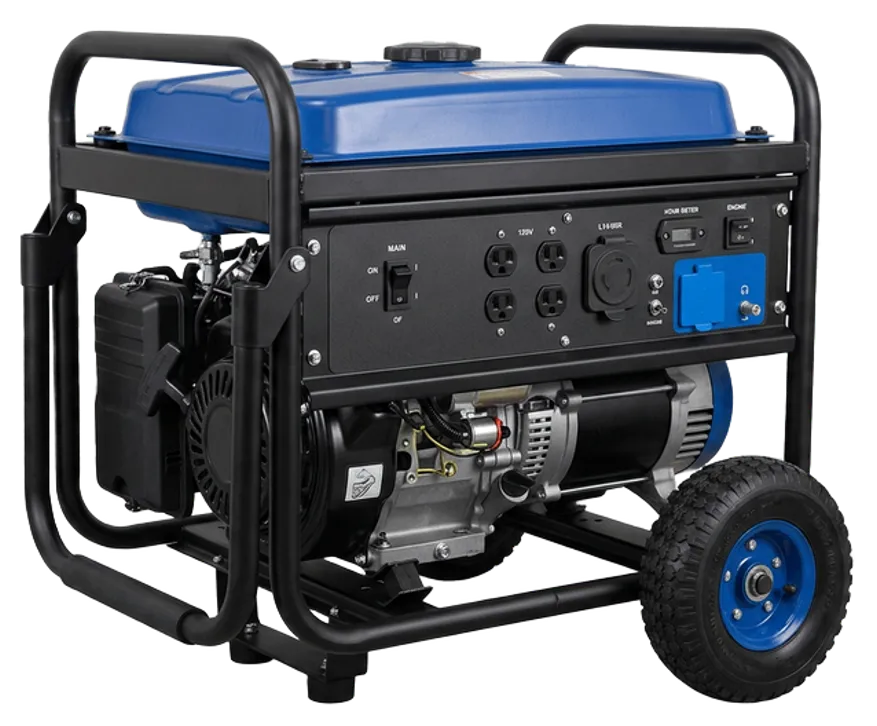
Cheapest route to a transfer-switch-ready 120/240V dual-fuel unit
Safety Notice
No carbon monoxide (CO) shutoff sensor has been confirmed for this model. Treat it as absent: use a battery-powered CO alarm indoors and place the generator at least 20 feet from any door, window, or vent.
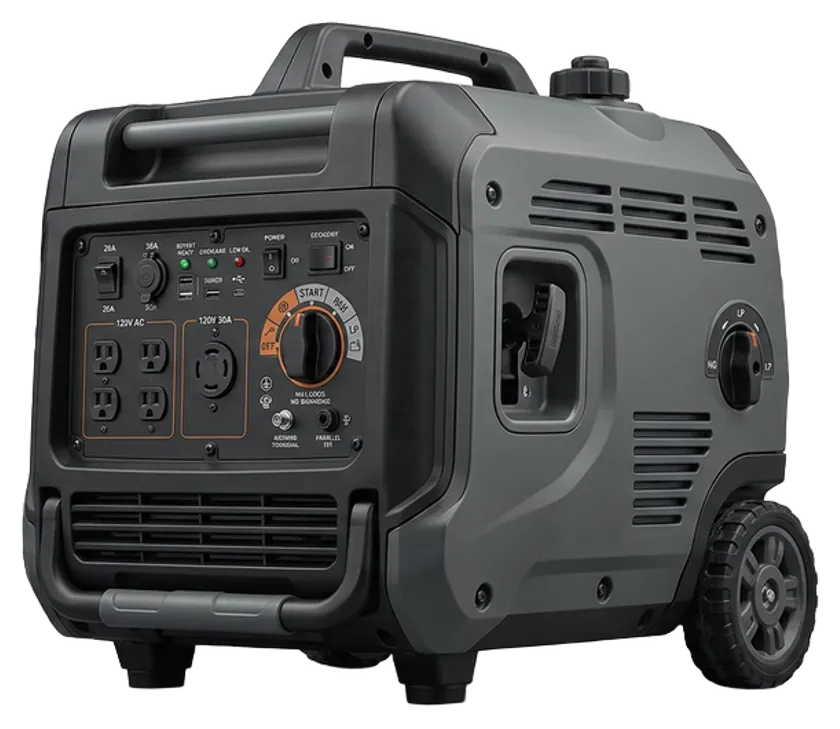
One of very few CARB-legal dual-fuel inverters; strong propane runtime
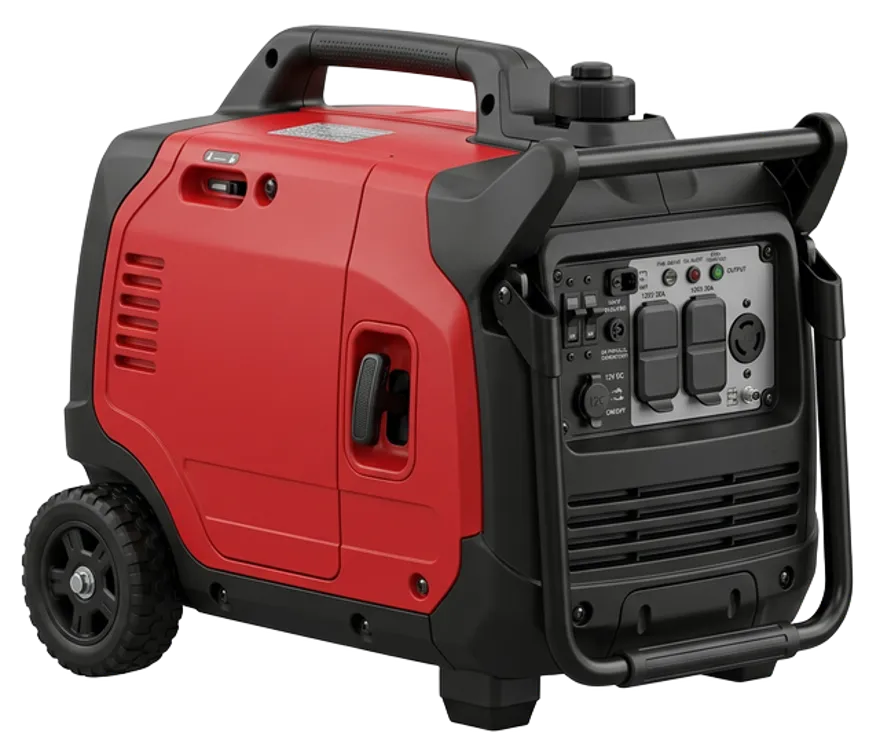
Quiet, electric-start 3,000W inverter for RV and tailgating
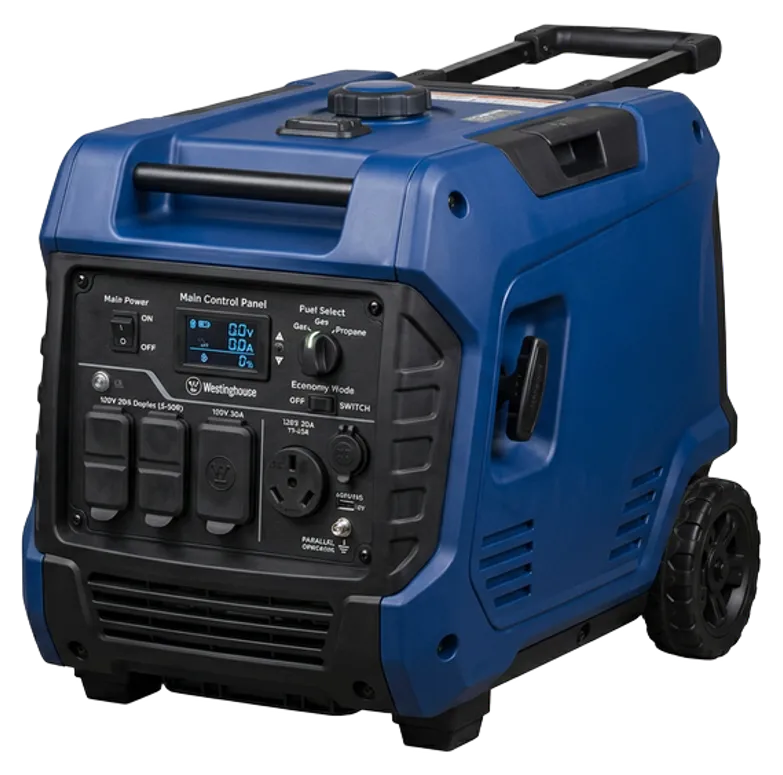
Quiet dual-fuel inverter with TT-30R and remote start for RV use
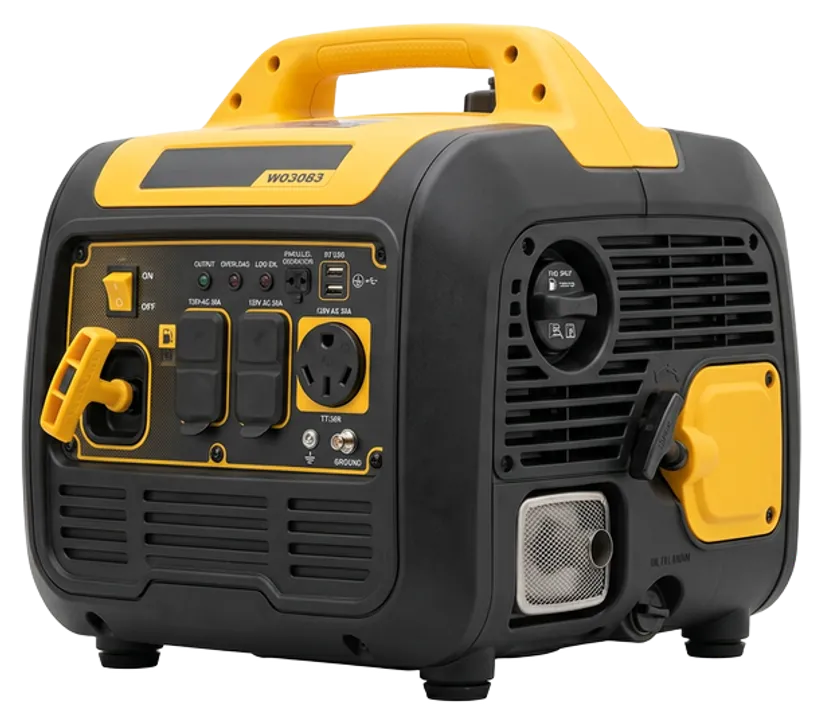
3,000W inverter with TT-30R and remote start under $800
The key difference between an inverter and a conventional generator is the power quality. Conventional open-frame generators produce raw AC power with 5 to 9% THD, which is fine for power tools and resistive loads but can damage sensitive electronics over time. Inverter generators produce power with under 3% THD, which is cleaner than most wall outlets. If you plan to charge a laptop, run a CPAP machine, or power a television, an inverter generator is the right choice.
Inverter generators cost more per watt than conventional generators. A 2,200W Honda EU2200i costs $1,000 to $1,300, while a 3,800W WEN DF475T costs $400 to $500. But inverters deliver value through lower noise, cleaner power, and better fuel economy. If you only need to run a refrigerator and lights during occasional outages, a conventional generator is fine. If you plan to run electronics, camp, or live in a noise-sensitive neighborhood, spend the extra money on an inverter.
Full portable generator comparison including open-frame models.
The quietest generators ranked by measured dBA.
RV-specific inverter picks with TT-30R outlets.
Calculate your exact wattage needs.
Affiliate disclosure: We earn commissions from qualifying purchases made through links on this page, at no extra cost to you. Our recommendations are based on independent research and testing. Read full disclosure.