Best Standby Generators 2026: Generac vs Kohler (10-26kW)
Last updated:
Fact-checked by Marcus Hayes, Master Electrician (License #CA-EL-89241), 15 years generator installation experience.
Standby generators are the gold standard for home backup power. They are permanently installed outside your home, connected to a natural gas or propane line, and start automatically within 10 to 30 seconds of a power outage. Unlike portable generators, they require no manual setup, produce no extension cords, and can run for days or weeks without refueling. We compared the top standby and whole-house backup options by wattage, fuel type, cost, and reliability.
Key Takeaways
The Generac Guardian 22kW is the top standby generator for whole-house backup, delivering 22,000W on natural gas or propane — enough for most 3,000+ sq ft homes including central AC.
Standby generators cost $5,000 to $15,000 installed but start automatically and run for days on a natural gas line — no manual setup, no fuel storage, no extension cords.
For homes without natural gas, the Kohler 20RESC is the top alternative with 20,000W output and a 5-year warranty.
Battery backup systems like the EcoFlow Delta Pro 3 and Anker SOLIX F3800 offer indoor-safe, silent alternatives to gas standby — but with limited runtime and higher cost per watt.
Standby generators require professional installation, an automatic transfer switch (ATS), and a permit. Plan 1 to 2 days for installation and 4 to 12 weeks for lead time on larger units.
Comparison Table
Key specs for all picks. Scroll horizontally on mobile to see all columns.
Comparison of best standby generators 2026: generac vs kohler (10-26kw)
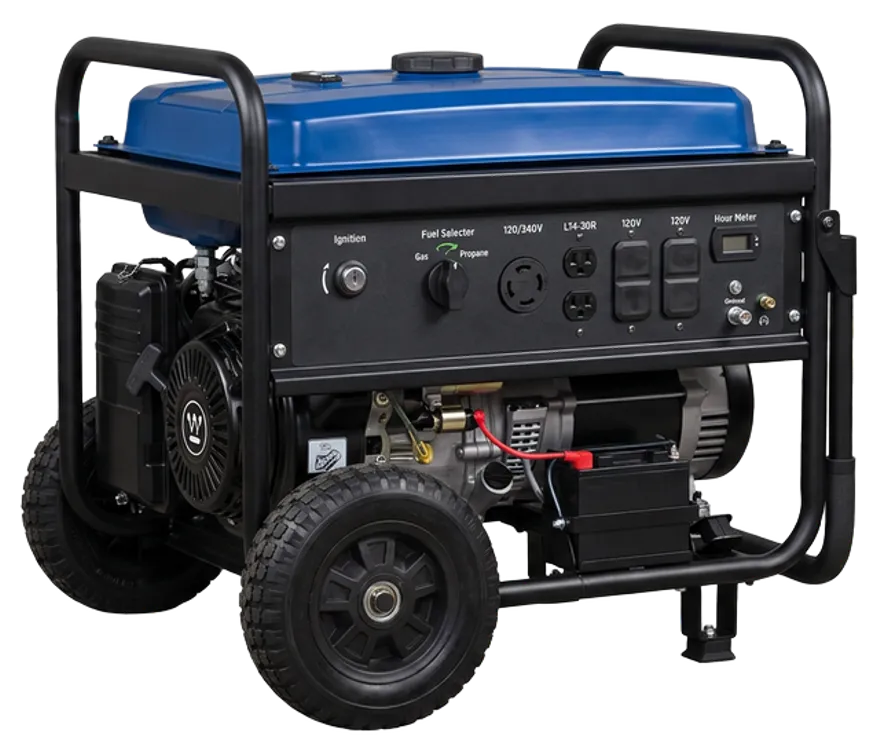
Transfer-switch-ready home backup with remote key fob start
Best Value Home Backup
Running:7,500W
Starting:9,500W
Noise:72 dBA
Weight:201 lb
Price:$1,000–$1,300
Safety Notice
This model does NOT include a carbon monoxide (CO) shutoff sensor. You MUST use a battery-powered CO alarm indoors and place the generator at least 20 feet from any door, window, or vent.
A standby generator is a permanent, stationary generator installed outside your home that starts
automatically during a power outage via an automatic transfer switch (ATS). It runs on natural gas or
propane, delivers 10kW to 26kW of continuous power, and can run for days or weeks without refueling.
Unlike portable generators, standby units require professional installation and a building permit.
Standby generators are rated in kilowatts (kW) and connected to your home's electrical panel through an
automatic transfer switch. When the ATS detects a utility power loss, it sends a start signal to the
generator, waits for it to reach stable output, then transfers your home's electrical load to the
generator — all within 10 to 30 seconds. When utility power returns, the ATS transfers back and the
generator shuts down and enters standby mode.
How to choose a standby generator
Choose a standby generator by matching its kW rating to your home's total wattage needs, verifying
you have natural gas or propane service, and budgeting for installation ($5,000–$15,000). A 22kW unit
handles most 3,000+ sq ft homes with central AC. A 10kW to 14kW unit handles essential loads for smaller
homes. Always confirm fuel availability before purchasing — natural gas is cheapest, propane requires a tank.
Professional Installation Required
Standby generators must be installed by a licensed electrician and require an electrical permit and
inspection. Installation involves connecting to your home's gas line, installing an automatic transfer
switch, and wiring to your main panel. Never attempt a standby generator installation yourself.
Frequently Asked Questions
What is the best standby generator for a whole house?
The Generac Guardian 22kW is the best standby generator for most whole-house applications, delivering 22,000 watts of continuous power on natural gas or propane — enough to run a 3,000+ sq ft home including central air conditioning. For homes without natural gas, the Kohler 20RESC is the top alternative with a 20,000W output and a 5-year warranty.
How much does a standby generator cost installed?
A standby generator costs $5,000 to $15,000 installed, including the generator, automatic transfer switch, permits, and electrician labor. A 22kW Generac Guardian installed typically costs $8,000 to $12,000. Smaller 10kW to 14kW units cost $5,000 to $8,000 installed. Natural gas units are cheaper to run; propane units require a tank.
How long can a standby generator run continuously?
A standby generator connected to a natural gas line can run continuously for days or weeks, limited only by the fuel supply and recommended oil changes every 200 hours (7 to 10 days). A propane standby generator runs as long as the tank lasts — a 500-gallon tank powers a 22kW generator for about 7 to 10 days at full load.
Does a standby generator add value to my home?
Yes. A standby generator typically adds 3% to 5% to home value, according to a Remodeling magazine cost-vs-value report. In hurricane-prone and winter-storm regions, the value increase can be higher. Buyers in these markets actively look for backup power and are willing to pay a premium for it.
What is the difference between a standby and a portable generator?
A standby generator is permanently installed outside your home, connected to a natural gas or propane line, and starts automatically during an outage via an automatic transfer switch. A portable generator is moved manually, runs on gasoline or propane, and must be started and connected by hand. Standby units cost more but provide seamless, hands-off backup.
How much propane does a 22kW Generac use per hour?
A 22kW Generac Guardian uses approximately 2.4 gallons of propane per hour at full load and 1.2 gallons per hour at 50% load. A 500-gallon propane tank (80% fill = 400 gallons) will last approximately 7 to 10 days at full load or 14 to 18 days at half load.
Affiliate disclosure:
We earn commissions from qualifying purchases made through links on this page, at no extra cost to you.
Our recommendations are based on independent research and testing.
Read full disclosure.