Best Generator for Power Outages (2026)
Last updated:
Fact-checked by Marcus Hayes, Master Electrician (License #CA-EL-89241), 15 years generator installation experience.
The best generator for a power outage is the Westinghouse iGen5000DFc — a 3,900-watt dual-fuel inverter with a CO shutoff sensor, 52 dBA quiet operation, 18-hour runtime, and remote key-fob start so you can fire it up from inside during a storm. For a budget emergency option, the WEN DF475T delivers 3,800W with a transfer-switch-ready outlet for $400 to $500. For extended outages where refueling is impractical, the EcoFlow Delta Pro 3 (4,096Wh battery) runs essentials silently and recharges with solar panels. This guide covers what to power, how much wattage you need, fuel strategy, runtime planning, and safety during an outage.
Key Takeaways
- The Westinghouse iGen5000DFc (3,900W, dual-fuel, CO sensor, 52 dBA) is the best overall generator for power outages.
- Essential outage loads — fridge, furnace, lights, Wi-Fi, TV — need 2,000 to 3,000 running watts with a 2,200W fridge starting surge.
- Propane stores indefinitely and is easier to find during emergencies; gasoline provides slightly more wattage but goes stale in 3 to 6 months.
- For multi-day outages, store 20 to 30 gallons of gas with stabilizer plus a 20lb propane tank for dual-fuel flexibility.
- Always place a gas or propane generator at least 20 feet from the house with a battery-powered CO alarm inside.
Top Picks for Power Outages
Recommendations organized by outage use case. Each pick links to a full review with verified specs.
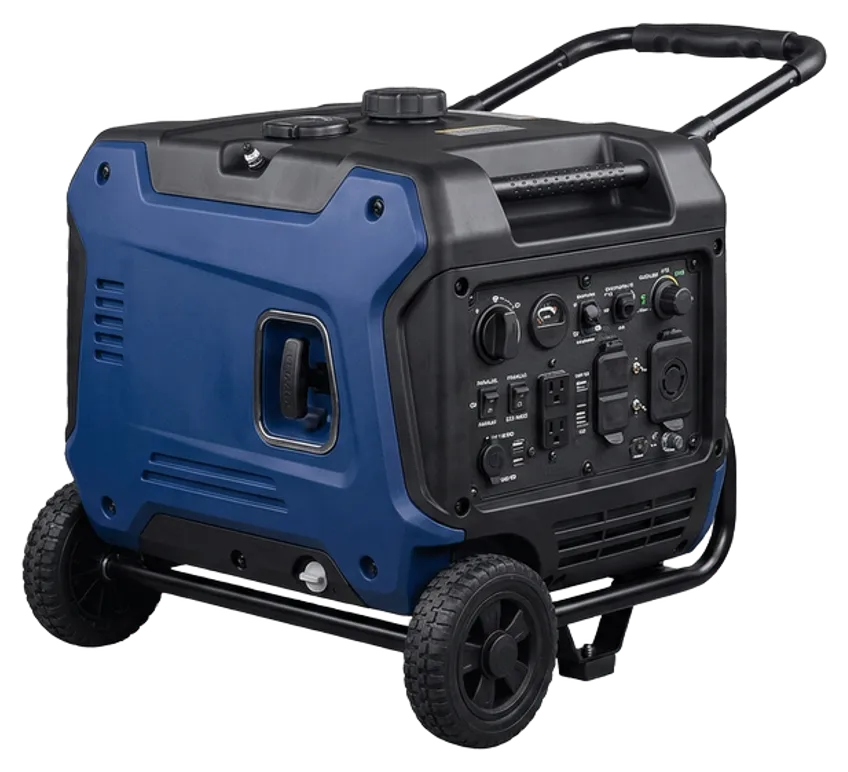
Best Overall for Power Outages
$800–$1,1003,900W dual-fuel with CO shutoff, 52 dBA, and 18-hour runtime. Remote key-fob start means you can fire it up from inside during a storm. Powers a fridge, furnace blower, lights, and TV simultaneously.
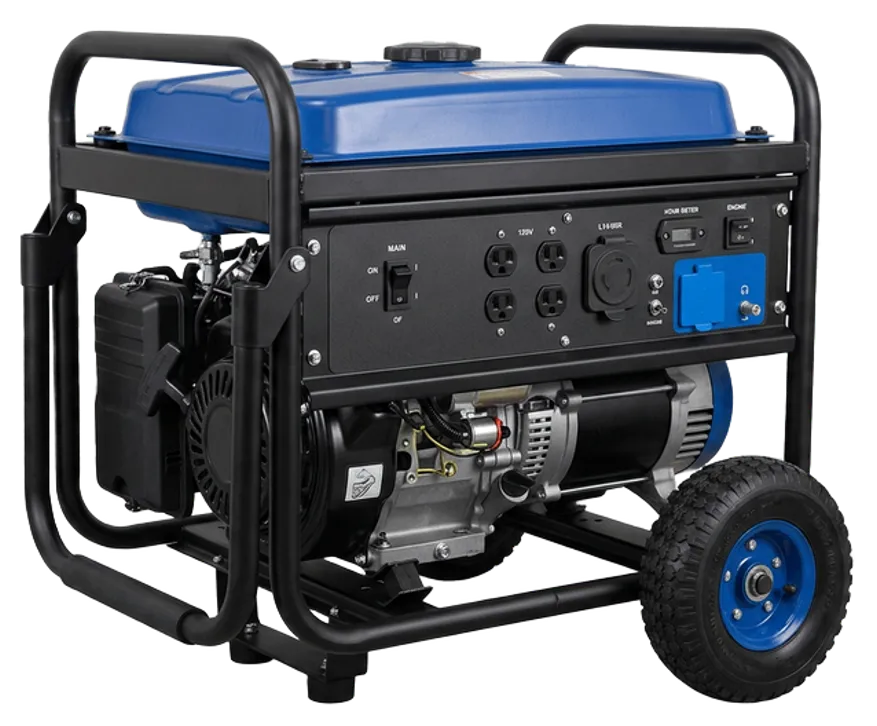
Best for Refrigerator + Essentials
$400–$5003,800W running with an L14-30R outlet for transfer-switch hookup at $400 to $500. Enough starting watts (4,750W) to handle a refrigerator compressor surge plus lights and a furnace blower.
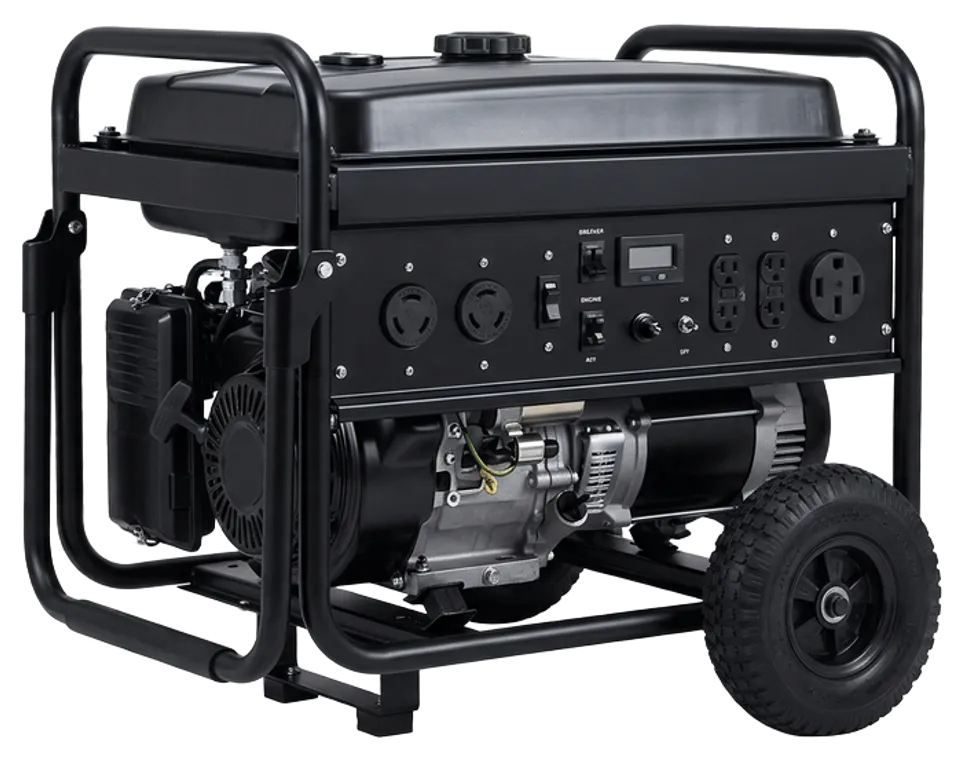
Best for AC + Major Appliances
$1,100–$1,4009,500 running watts and 12,000W starting — enough to run a window AC, fridge, well pump, and furnace blower through a transfer switch. Both L14-30R and 14-50R outlets for direct panel connection.
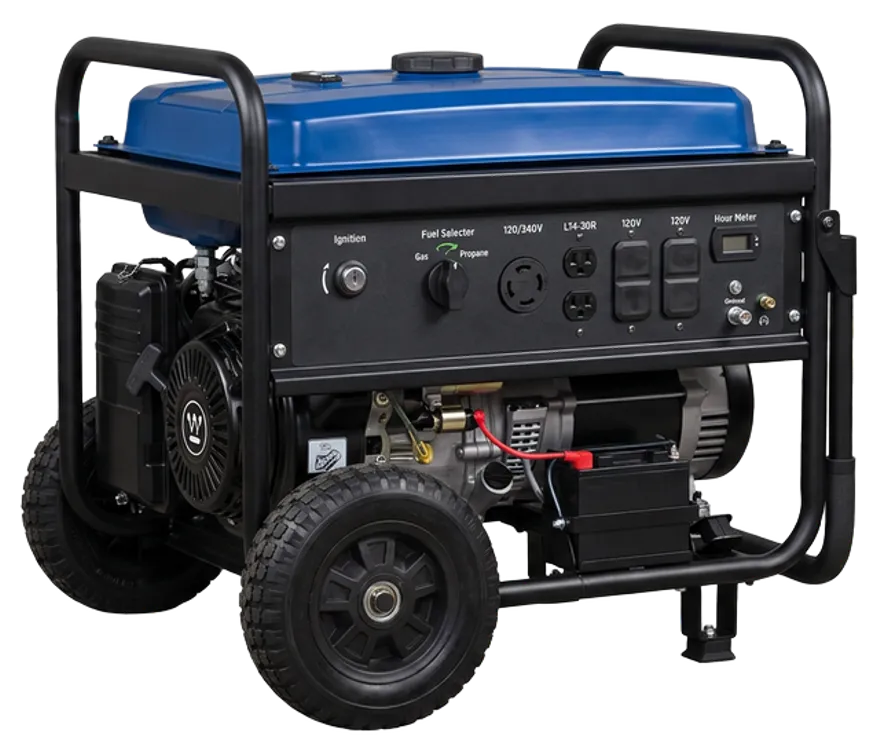
Best Dual-Fuel Option
$1,000–$1,3007,500W dual-fuel with L14-30R and remote key-fob start. Propane stores indefinitely, so you always have fuel ready. Note: no CO sensor — add a battery-powered CO alarm.
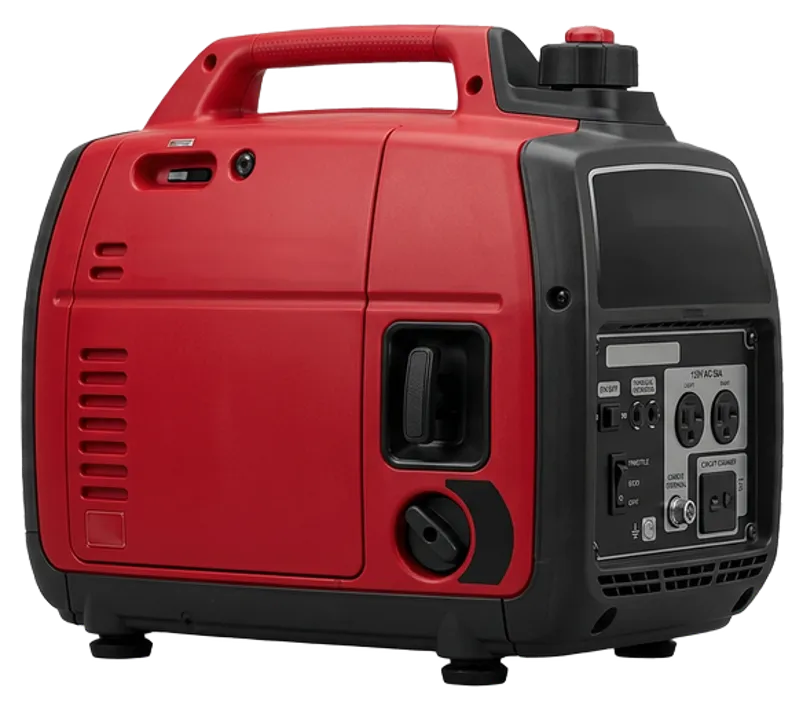
Best Quiet Option
$1,000–$1,30048 dBA — the quietest generator available. Ideal for close-quarters neighborhoods during outages. 1,800W runs a fridge or CPAP but not both simultaneously. Pair two in parallel for 3,600W.
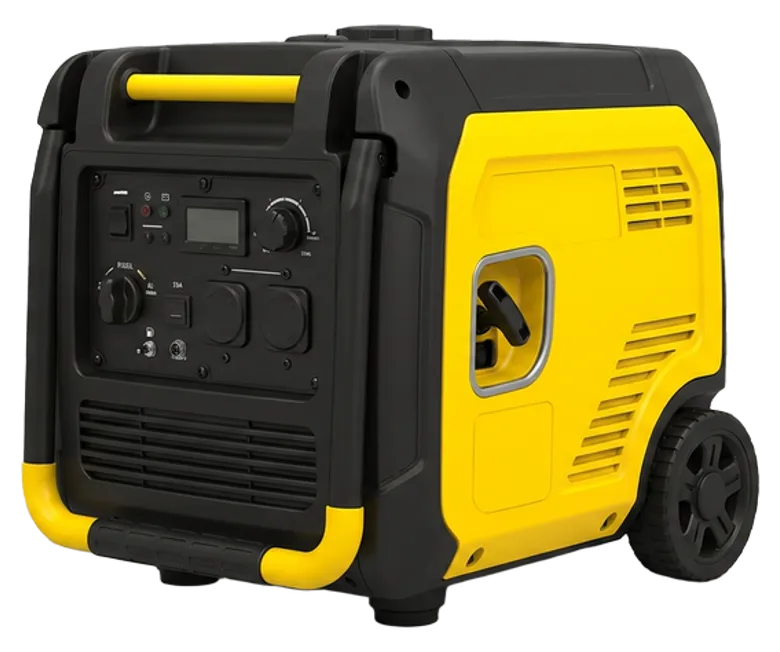
Best Budget Emergency Generator
$700–$900Champion 201592 4000W Dual Fuel Inverter
4,000W starting watts, dual-fuel, and 25-hour propane runtime on a 20lb tank at $700 to $900. CO Shield sensor included. TT-30R outlet handles RV or extension-cord loads.
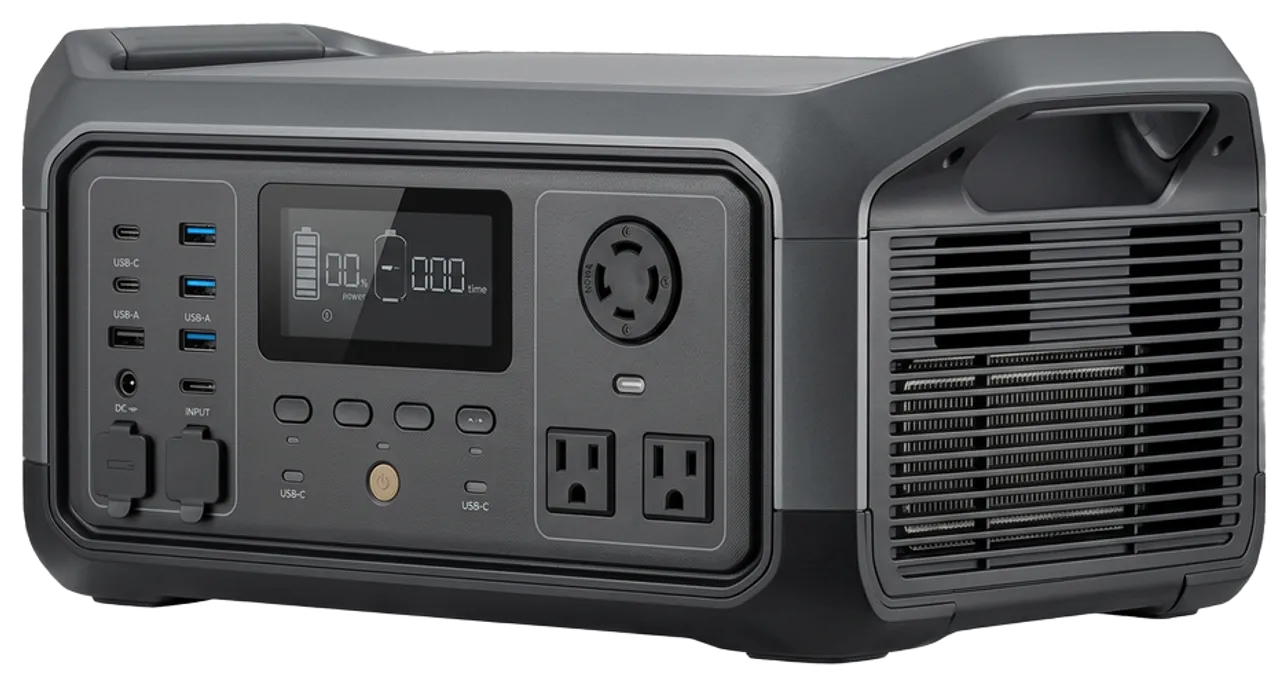
Best for Extended Outages
$2,500–$3,5004,096Wh LiFePO4 battery with 4,000W output. Indoor-safe, silent, and rechargeable with solar panels during multi-day outages. No fuel to store or refuel — just sunlight.
Comparison: Outage Generators at a Glance
Key specs for all picks. Scroll horizontally on mobile to see all columns.
| Generator | Running W | Starting W | Fuel | Runtime | Noise | CO Sensor | Price |
|---|---|---|---|---|---|---|---|
| Westinghouse iGen5000DFc | 3,900 | 5,000 | gasoline/propane | 18h | 52 dBA | Yes | $800–$1,100 |
| Honda EU2200i | 1,800 | 2,200 | gasoline | 8.1h | 48 dBA | Yes | $1,000–$1,300 |
| DuroMax XP12000EH | 9,500 | 12,000 | gasoline/propane | 19h | 74 dBA | Yes | $1,100–$1,400 |
| EcoFlow Delta Pro 3 | 4,000 | 8,000 | battery/solar | 4,096Wh | --- | Unknown | $2,500–$3,500 |
| Westinghouse WGen7500DF | 7,500 | 9,500 | gasoline/propane | 11h | 72 dBA | No | $1,000–$1,300 |
| Champion 201592 4000W Dual Fuel Inverter | --- | 4,000 | gasoline/propane | 10h | 64 dBA | Yes | $700–$900 |
| WEN DF475T | 3,800 | 4,750 | gasoline/propane | 11h | --- | Unknown | $400–$500 |
What Each Generator Can Realistically Run During an Outage
Running watts are the continuous power an appliance needs; starting watts are the brief 2-to-3-second surge required to start a motor. A generator must handle the highest single starting surge plus the running watts of everything else running at the same time. Use our generator size calculator for a precise figure based on your specific appliances.
| Generator | Running W | Starting W | Can Power | Cannot Power |
|---|---|---|---|---|
| WEN DF475T | 3,800W | 4,750W | Fridge, lights, furnace blower, TV, phone chargers | Window AC, well pump, microwave + fridge at once |
| Champion 201592 | ~2,500W | 4,000W | Fridge, lights, furnace blower, CPAP | Window AC, well pump, microwave |
| Honda EU2200i | 1,800W | 2,200W | Fridge (alone), lights, CPAP, phone chargers, Wi-Fi router | Furnace blower + fridge simultaneously, window AC |
| Westinghouse iGen5000DFc | 3,900W | 5,000W | Fridge, furnace, lights, TV, microwave, sump pump | Window AC + fridge, well pump + everything else |
| Westinghouse WGen7500DF | 7,500W | 9,500W | Fridge, furnace, well pump, lights, microwave, window AC | Central AC, electric water heater, electric range |
| DuroMax XP12000EH | 9,500W | 12,000W | Fridge, furnace, well pump, window AC, microwave, most essentials | Central AC (24,000 BTU+), electric water heater + range simultaneously |
| EcoFlow Delta Pro 3 | 4,000W | 8,000W | Fridge, furnace, lights, TV, microwave (battery-limited) | Central AC, multi-day runtime without solar recharge |
Wattage values are typical running and starting watts. Not all listed appliances can run simultaneously. A refrigerator alone needs about 2,200W to start its compressor — the single largest surge in most homes.
How Many Watts Does a Household Need During an Outage?
| Appliance | Running Watts | Starting Watts | Priority During Outage |
|---|---|---|---|
| Refrigerator | 800 to 1,200W | 2,200W | Essential — keep food safe |
| Freezer | 500 to 800W | 1,500W | Essential — can hold cold 48h without power |
| Lights (LED, whole house) | 100 to 300W | 0W | Essential — safety and comfort |
| Wi-Fi Router | 10W | 0W | Essential — emergency alerts and communication |
| TV | 100 to 150W | 0W | Secondary — weather and news updates |
| Furnace Blower (gas) | 600 to 800W | 1,500W | Essential in cold weather |
| Window AC (10,000 BTU) | 1,200W | 3,600W | Secondary — needed in summer outages |
| Central AC (3-ton) | 3,500W | 10,500W | Secondary — requires 12,000W+ generator |
| Well Pump | 1,000W | 2,000W | Essential if no city water |
| Phone Chargers | 50W | 0W | Essential — keep phones charged |
The typical outage essentials — refrigerator, lights, Wi-Fi, TV, furnace blower, and phone chargers — total about 2,000 to 3,000 running watts. The critical number is the refrigerator's 2,200W starting surge, which is the single largest motor start in most homes. Your generator must handle that surge plus the running watts of everything else. For a detailed walkthrough, read our generator sizing guide or use the generator size calculator.
Fuel Choice During Outages: Gasoline vs Propane vs Dual Fuel
| Factor | Gasoline | Propane | Dual Fuel |
|---|---|---|---|
| Wattage output | 100% rated | 85 to 90% rated | 100% on gas, 85 to 90% on propane |
| Shelf life | 3 to 6 months (with stabilizer, up to 1 year) | Indefinite | Gas expires; propane does not |
| Availability during emergencies | Often scarce — stations need power to pump | Usually available at hardware and propane suppliers | Flexibility to use either |
| Fuel cost per kWh | Lower | Slightly higher | Varies by fuel |
| Storage | 5-gal cans, ventilated, away from house | 20lb or 30lb tanks, no ventilation needed | Both storage methods |
| Best for | Maximum wattage, short outages | Long-term readiness, clean storage | Outage preparedness — best overall |
A 20lb propane tank (4.7 gallons) runs a 5,000W dual-fuel generator at 25% load for 20 to 25 hours. A 5-gallon gas can runs the same generator for 10 to 12 hours at 25% load. For a 24-hour outage, one 20lb propane tank or two 5-gallon gas cans will keep essentials running. Read our full fuel consumption guide for detailed runtime math, and our fuel stabilizer guide for long-term gasoline storage.
Runtime and Fuel Storage for Multi-Day Outages
| Outage Duration | Generator Type | Fuel Needed | Runtime Per Refuel |
|---|---|---|---|
| 2 to 8 hours | 2,000W inverter or 2,000Wh solar | 1 to 3 gal gas or full battery | 8 to 11 hours |
| 8 to 24 hours | 5,000W dual-fuel | 5 to 10 gal gas or 20lb propane | 11 to 18 hours |
| 1 to 3 days | 7,500W+ dual-fuel + transfer switch | 20 to 30 gal gas + 20lb propane | 11 hours per tank (gas) |
| 3 to 7 days | 22kW standby on natural gas | Natural gas line (unlimited) | Days to weeks |
| Indefinite | Solar generator + 400W panel | Sunlight (2 to 3kWh/day recharge) | Limited by daily solar input |
For multi-day outages, run your generator in shifts rather than continuously: power the fridge and freezer for 4 to 6 hours, then shut down for 4 to 6 hours. A closed refrigerator stays cold for 4 hours, and a full freezer holds its temperature for 48 hours. This strategy can cut fuel consumption by 50% and extend your fuel supply significantly. For more on safe runtime limits, read our how long can a generator run guide.
Generator Safety During Outages
Carbon Monoxide Kills During Outages
Over 70 Americans die each year from carbon monoxide poisoning caused by portable generators, most during power outages. The cause is almost always improper placement — too close to the house. Place your generator at least 20 feet from any door, window, or vent, with the exhaust pointed away from the building. Even if your generator has a CO shutoff sensor, use a battery-powered CO alarm inside your home. Read our full CO safety guide and our placement guide.
| Safety Rule | Why It Matters |
|---|---|
| Place 20+ feet from house | Prevents CO from entering through doors, windows, and vents |
| Point exhaust away from building | Directs CO away from living spaces |
| Use a battery-powered CO alarm | Detects CO indoors even if the generator has a sensor |
| Never run indoors or in garage | CO builds up within minutes, even with doors open |
| Refuel only when engine is cool | Spilled gas on a hot engine can ignite |
| Use a transfer switch or interlock | Prevents backfeeding utility lines — protects lineworkers and is required by NEC |
| Use heavy-duty extension cords | Undersized cords overheat and can cause fires |
| Do not run in rain without cover | Water causes electrocution and short circuits — use a generator tent |
For safe panel connection, read our transfer switch guide and our generator connection guide. For running in wet conditions, see our rain safety guide.
Power Outage Preparation Checklist
Before an Outage
- Test your generator monthly under load
- Store 10 to 20 gal gasoline with fuel stabilizer, or a 20lb propane tank
- Install a transfer switch or interlock kit
- Keep a battery-powered CO alarm with fresh batteries
- Have heavy-duty (12-gauge or thicker) extension cords ready
- Store 1 quart of oil and a spare spark plug per 50 hours of expected runtime
- Keep freezer full — a full freezer holds cold longer than a half-empty one
During an Outage
- Place generator 20+ feet from house, exhaust pointing away
- Connect via transfer switch — never backfeed through a dryer outlet
- Run fridge and freezer in 4-to-6-hour shifts to save fuel
- Refuel only when the engine is cool — spilled gas on a hot engine ignites
- Check the CO alarm battery
- Do not run in rain without a generator tent or canopy
- Unplug appliances before connecting or disconnecting the generator