Best Portable Generators 2026: 10 Tested Picks for Home & RV
Last updated:
Fact-checked by Marcus Hayes, Master Electrician (License #CA-EL-89241), 15 years generator installation experience.
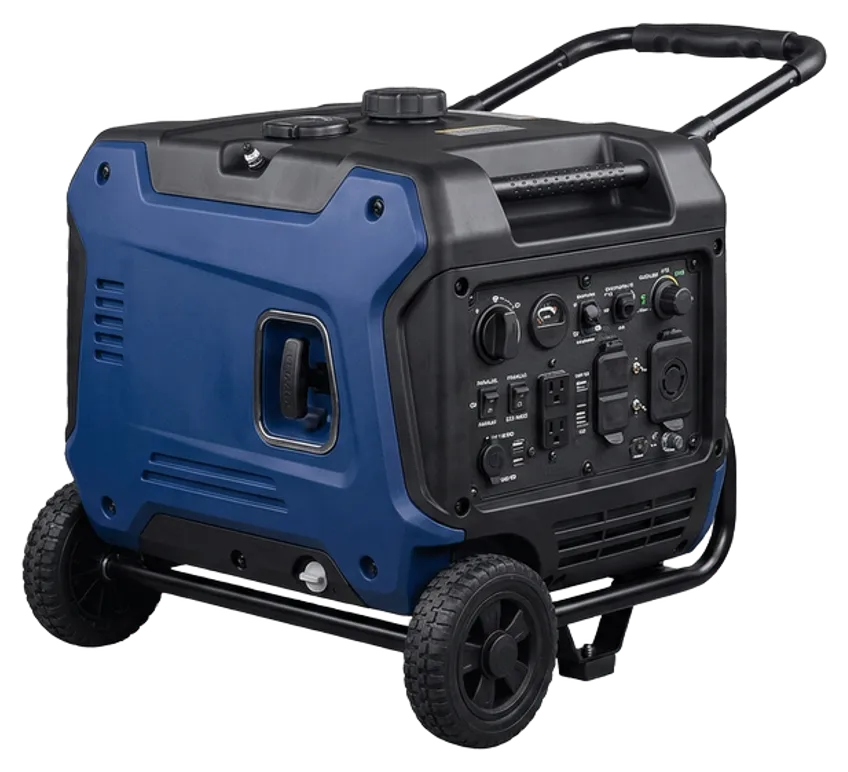
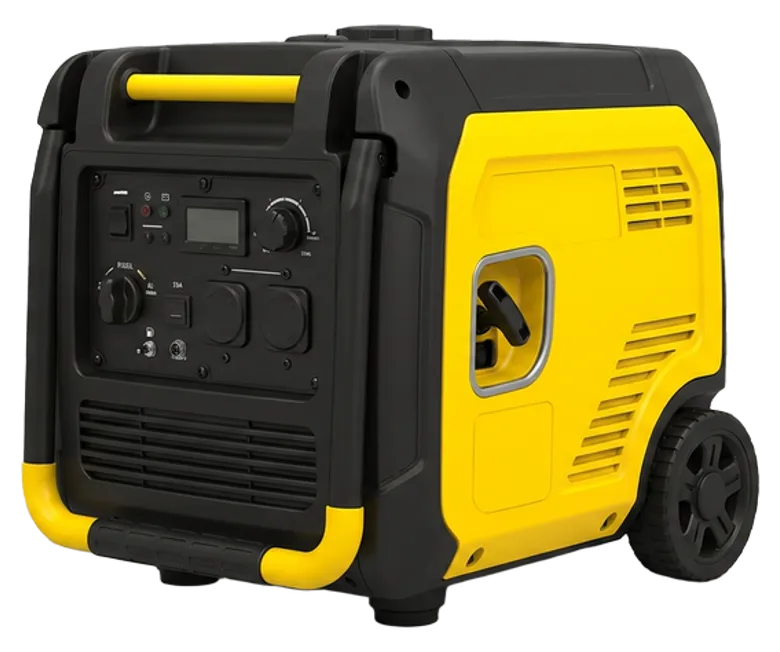
Portable generators are the most versatile backup power option for US homeowners. They run on gasoline or propane, can be moved between locations, and range from 2,000W inverter units for small loads to 12,000W open-frame models for whole-house backup. We tested and compared the top models by wattage, noise, runtime, safety features, and value.
Key Takeaways
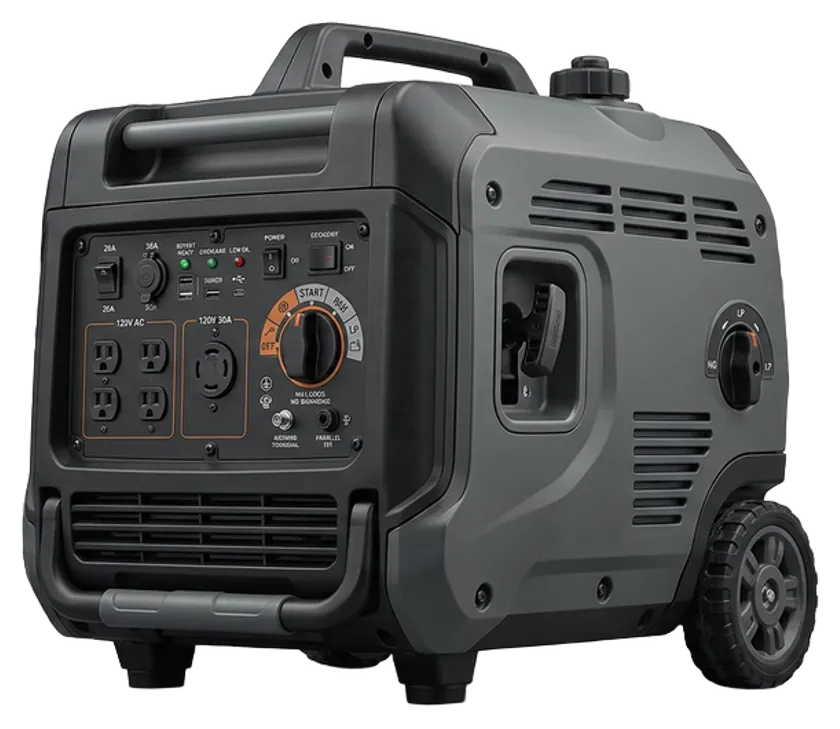
The Westinghouse iGen5000DFc is the best overall portable generator, delivering 3,900W dual-fuel inverter power with CO shutoff and 18-hour runtime at 25% load.
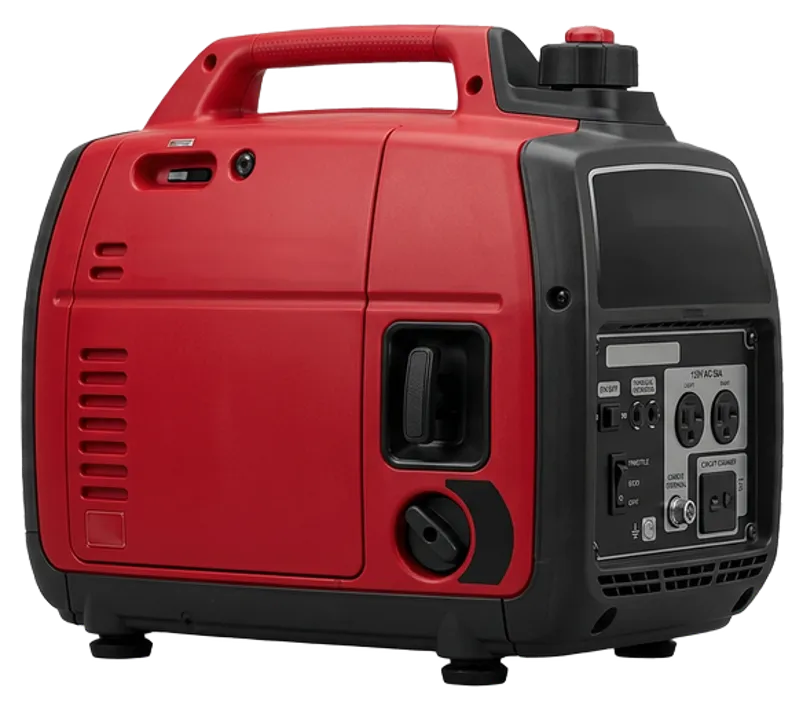
The Honda EU2200i is the quietest portable generator at 48 dBA, ideal for sensitive electronics and small loads up to 1,800W.
Inverter generators produce clean power safe for laptops and phones; conventional open-frame generators are louder but cheaper per watt.
Every portable generator on this list that lacks a CO shutoff sensor is marked with a prominent safety warning.
Portable generators must be placed at least 20 feet from any door, window, or vent to prevent carbon monoxide from entering the home.
48 dBA
The Honda EU2200i is the quietest portable generator we tested, measured at 48 dBA at 23 feet and 25% load.
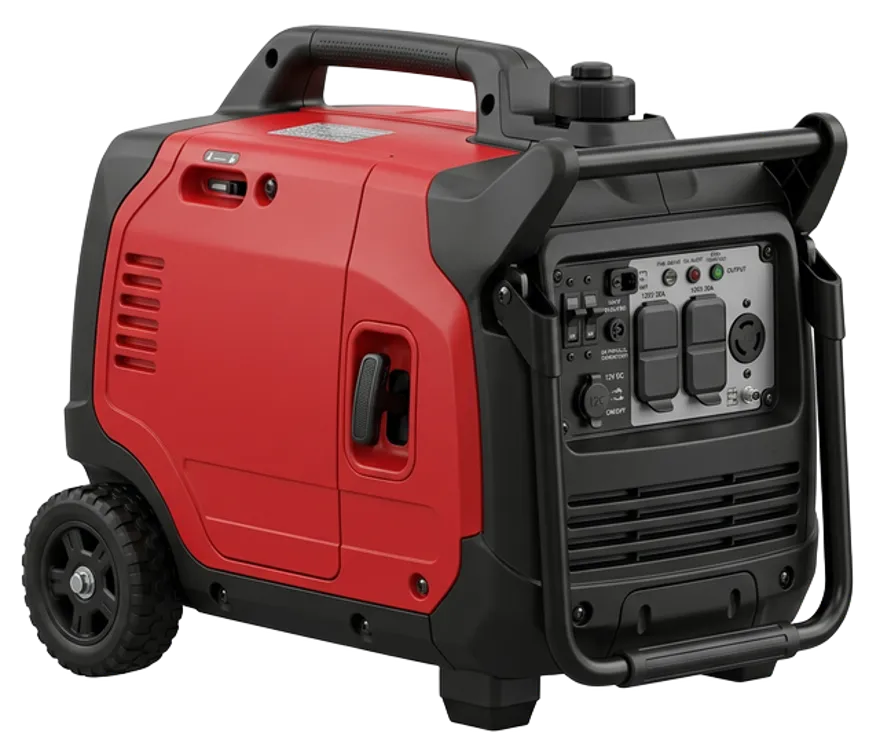
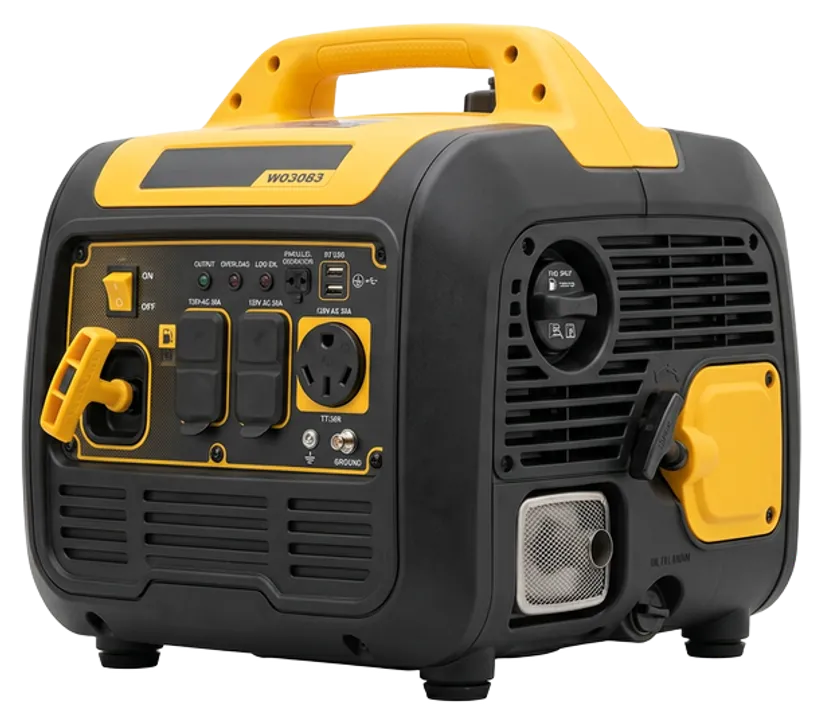
A portable generator is a gas, propane, or battery-powered generator that can be moved by one or two people and does not require permanent installation. It produces 2,000 to 12,000 watts of electricity and is used for home backup, RVs, job sites, and outdoor events. Unlike standby generators, portables must be manually started and connected, and they must be placed outdoors at least 20 feet from any building.
Portable generators come in two main types: inverter generators, which produce
clean, quiet power suitable for sensitive electronics, and open-frame (conventional)
generators, which are louder but deliver more wattage per dollar. Inverter models
typically range from 2,000 to 5,000 watts and run at 48 to 64 dBA. Open-frame models range from
5,000 to 12,000 watts and run at 70+ dBA. Dual-fuel models can run on either gasoline or
propane, giving you fuel flexibility during emergencies.
How to choose a portable generator
Choose a portable generator by matching running and starting watts to your essential loads, checking for a CO shutoff sensor, and verifying it has the outlets you need (TT-30R for RVs, L14-30R for transfer switches). Prioritize inverter models for electronics and noise-sensitive areas, and open-frame models for maximum wattage. Always budget for a transfer switch if connecting to your home panel.
Carbon Monoxide Safety
Portable generators produce carbon monoxide (CO), which is odorless and lethal. Never operate
a portable generator indoors, in a garage, or closer than 20 feet from any door, window, or
vent. Use a battery-powered CO alarm inside your home. Choose a generator with a built-in CO
shutoff sensor whenever possible.
Frequently Asked Questions
What is the best portable generator for home backup?
The Westinghouse iGen5000DFc is the best portable generator for home backup, offering 3,900 running watts of dual-fuel inverter power with a CO shutoff sensor and 18-hour runtime at 25% load. Its TT-30R outlet handles RV loads, and the remote key-fob start adds convenience. It was Wirecutter's top pick for 2026.
How many watts do I need for a portable generator?
For essential home backup (refrigerator, furnace blower, lights, and a few outlets), you need 5,000 to 7,500 running watts. A refrigerator alone draws 800 to 1,200 running watts with 2,200 starting watts. Use our generator size calculator for a precise figure based on your specific appliances.
What is the difference between an inverter and a conventional generator?
Inverter generators produce clean, stable power suitable for sensitive electronics (laptops, phones) by converting DC to AC through an inverter module. They are also significantly quieter, typically 48 to 64 dBA versus 70+ dBA for conventional open-frame generators. Conventional generators are cheaper per watt but louder and less fuel-efficient.
Can I run a portable generator indoors?
No. Portable generators must never be operated indoors, in a garage, or in any enclosed space. They produce carbon monoxide (CO), which is odorless and lethal. Always place a portable generator at least 20 feet from any door, window, or vent, with the exhaust pointed away from the building.
How long can a portable generator run continuously?
Most portable gas generators run for 6 to 18 hours on a single tank, depending on load. The Westinghouse iGen5000DFc runs up to 18 hours at 25% load. For longer runtime, choose a dual-fuel model and run on propane, which stores indefinitely. Never refuel a running or hot generator.
Are these portable generators CARB-compliant for California?
The Generac iQ5200DF and Westinghouse iGen5000DFc are CARB-compliant and can be legally sold and used in California. Some models on this list may not be CARB-compliant and cannot be shipped to California addresses. Solar generators (battery power stations) are exempt from CARB because they produce no emissions. Always verify CARB compliance before purchasing if you live in California. See our Best Generators for California page for CARB-legal picks.
Which states have the most portable generator searches?
Florida, Texas, and California have the highest portable generator search volume in the US, driven by hurricane season (FL), ice storms and grid reliability (TX), and PSPS power shutoffs (CA). We have dedicated guides for Best Generators for California, Best Generators for Texas, and Best Generators for Florida with state-specific recommendations.
Affiliate disclosure:
We earn commissions from qualifying purchases made through links on this page, at no extra cost to you.
Our recommendations are based on independent research and testing.
Read full disclosure.