Best Generators for Winter Power Outages 2026

Winter power outages are especially dangerous because they coincide with heating demand — and most homeowners do not realize their generator needs different preparation for cold weather. Cold temperatures reduce fuel efficiency, battery capacity, and can make gasoline engines harder to start. This guide covers the best generators for winter outages, fuel choice, cold-weather performance, and a complete winterization checklist.

Key Takeaways

  • Propane is the best winter fuel — it stores indefinitely, performs better in cold than gasoline, and does not gel in freezing temperatures.
  • Cold weather reduces generator fuel efficiency by 10 to 20% and battery capacity by 20 to 30% — size up accordingly.
  • A gas furnace blower needs only 600 to 1,500W, but electric heat requires 5,000 to 15,000W — know your heating type before sizing.
  • Winterize your generator with cold-weather oil (5W-30), fuel stabilizer, and a battery tender for the electric start.
  • Texas and the Southeast are most vulnerable to winter outages — the 2021 Winter Storm Uri left 4 million homes without power.

Comparison Table

Key specs for all picks. Scroll horizontally on mobile to see all columns.

Comparison of best generators for winter power outages 2026
Model Award Running W Starting W Fuel Noise dBA Runtime L14-30 CO Shutoff Price Band Buy
Westinghouse iGen5000DFc Best Overall 3,900 5,000 gasoline, propane 18h @25% No Yes $800–$1,100 Buy Now
DuroMax XP12000EH Best for Whole-House Backup 9,500 12,000 gasoline, propane 74 19h @25% Yes Yes $1,100–$1,400 Buy Now
EcoFlow Delta Pro 3 Best Battery Backup 4,000 8,000 battery, solar Yes $2,500–$3,500 Buy Now
Westinghouse WGen7500DF Best Value Home Backup 7,500 9,500 gasoline, propane 72 11h @25% Yes No $1,000–$1,300 Buy Now
Generac iQ5200DF Best for California (CARB) 3,900 5,200 gasoline, propane 15h @25% No Yes $1,000–$1,300 Buy Now

Top Picks

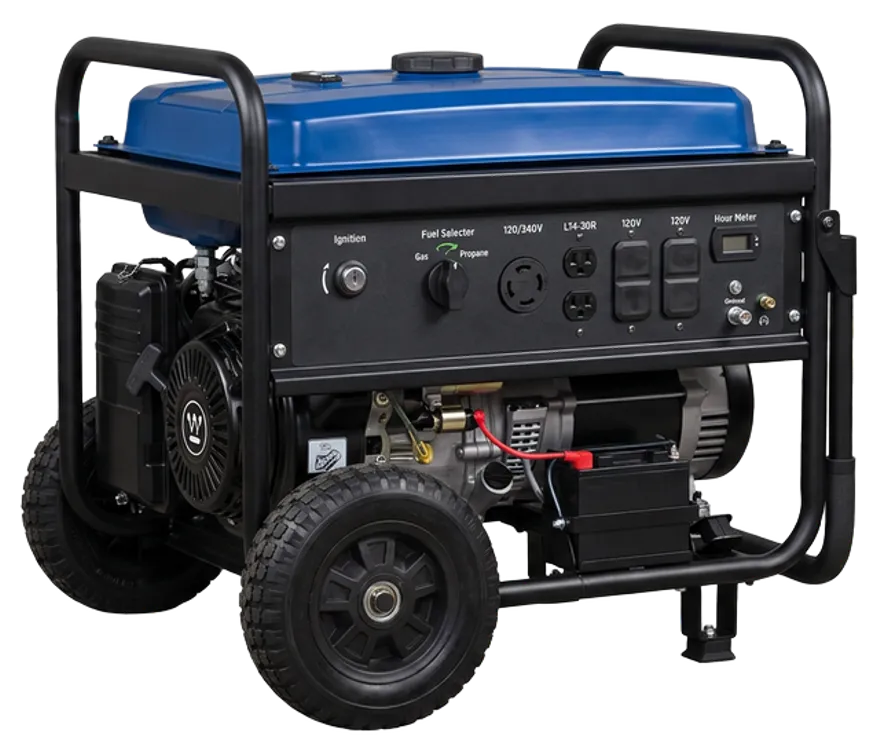
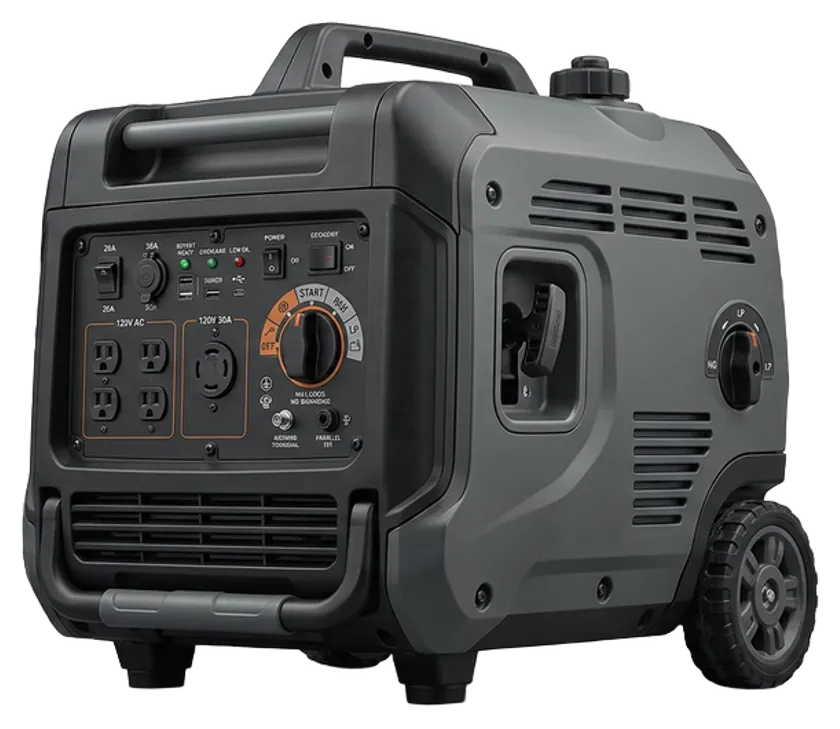
Westinghouse WGen7500DF

Transfer-switch-ready home backup with remote key fob start

Best Value Home Backup
Running: 7,500W
Starting: 9,500W
Noise: 72 dBA
Weight: 201 lb
Price: $1,000–$1,300

Safety Notice

This model does NOT include a carbon monoxide (CO) shutoff sensor. You MUST use a battery-powered CO alarm indoors and place the generator at least 20 feet from any door, window, or vent.
Why winter changes generator requirements

Winter changes generator requirements in three ways: cold weather reduces fuel efficiency by 10 to 20%, gasoline can gel and become harder to start below 20°F, and battery power stations lose 20 to 30% of their capacity in freezing temperatures. Propane performs better than gasoline in cold and stores indefinitely, making dual-fuel generators the best choice for winter backup.

Winter CO Risk

Carbon monoxide deaths from generators spike in winter because homeowners place generators closer to the house to protect them from snow and wind. Never compromise the 20-foot rule. Use a purpose-built generator tent for weather protection and always maintain a battery-powered CO alarm inside your home.

Winter generator checklist

  1. 1. Change oil to a cold-weather grade (5W-30) before the first freeze.
  2. 2. Add fuel stabilizer to gasoline and run the engine for 5 minutes to circulate it.
  3. 3. Fill propane tanks — propane stores indefinitely and performs better in cold.
  4. 4. Keep a battery tender on the electric start battery to maintain charge in cold.
  5. 5. Buy a purpose-built generator tent for snow and rain protection — never a tarp.
  6. 6. Store 20+ gallons of gasoline (with stabilizer) and 1 to 2 propane tanks.
  7. 7. Test the generator monthly during winter — cold starts can reveal fuel or battery issues.

Frequently Asked Questions

What is the best generator for winter power outages?
The best generator for winter power outages is a dual-fuel model with at least 7,500 running watts and an L14-30R outlet for transfer-switch connection. The DuroMax XP12000EH (9,500W) and Westinghouse WGen7500DF (7,500W) are top picks. Propane is preferred for winter because it stores indefinitely and performs better in cold temperatures than gasoline, which can gel.
Can I run a generator in the snow?
Yes, but the generator must be protected from direct snow accumulation with a purpose-built generator tent or enclosure. Never use a tarp that blocks airflow or traps exhaust. Keep the generator at least 20 feet from the house and clear snow from around the unit to maintain airflow. Cold weather reduces fuel efficiency by 10 to 20%.
Does cold weather affect generator performance?
Yes. Cold weather reduces generator fuel efficiency by 10 to 20% and can make gasoline engines harder to start, especially below 20°F. Propane performs better in cold than gasoline. Battery power stations lose 20 to 30% of their capacity in freezing temperatures. Always store your generator in a sheltered area and pre-warm the engine if possible.
How do I winterize my generator?
To winterize your generator: (1) Change the oil to a cold-weather grade (5W-30), (2) Add fuel stabilizer to gasoline and run the engine for 5 minutes, (3) Store in a dry, sheltered area, (4) Keep a battery tender on the electric start battery, (5) For propane models, ensure the tank is full and the regulator is clear of ice.
Is natural gas or propane better for winter backup?
Natural gas is the most reliable winter fuel because it is piped underground and is not affected by storms or delivery disruptions. Propane is the second choice — it stores indefinitely and performs well in cold, but requires a tank and delivery. Gasoline is the least reliable winter fuel because it goes bad in 3 to 6 months and can gel in extreme cold.
What size generator do I need for winter heating?
A gas furnace blower needs 600 to 1,500 running watts and 1,500 to 3,000 starting watts. Electric heat requires 5,000 to 15,000 watts and is generally impractical for portable generators. A 7,500W generator can run a gas furnace, refrigerator, lights, and electronics simultaneously. Use our generator size calculator for a precise figure.

Affiliate disclosure: We earn commissions from qualifying purchases made through links on this page, at no extra cost to you. Our recommendations are based on independent research and testing. Read full disclosure.